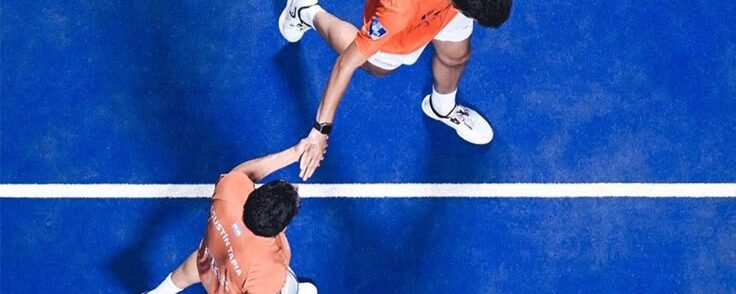
Every few months, someone at a dinner party announces that padel is over. That the courts are emptying, the rackets are gathering dust, that the whole thing was a fad for people who couldn’t commit to tennis.
They are wrong, and the numbers make it difficult to argue otherwise.
In 2024, 400,000 people in Britain played padel. By 2025 that figure had more than doubled to 860,000. The LTA set a target of 1,000 courts across the UK by 2026. They hit it early. There are now over 1,600 courts in Britain and court bookings at established London venues regularly sell out days in advance. This is not the trajectory of a dying trend.
The question of whether padel is a passing fad gets asked partly because of how it arrived in London. It came in through a specific door — affluent, social, Notting Hill adjacent — and carried with it a certain self-consciousness. The rackets were expensive. The courts were in members’ clubs. The people playing it tended to talk about it a great deal. This made it easy to dismiss as the latest thing that a particular kind of Londoner had decided to do before moving on to the next thing.
But padel has done something that most wellness trends fail to do. It has moved beyond its original audience. It is now in public parks, leisure centres and council facilities. Hyde Park has a pay-and-play court. The LTA and the UK government have invested over £20 million in court construction aimed specifically at underserved communities. A sport that arrived in London as a luxury amenity is becoming a mainstream participation sport in a way that, say, reformer pilates has not.
Globally the picture is even clearer. There are now nearly 60,000 padel courts worldwide, up 16 per cent in a single year. Over 35 million people play. The sport is on track for Olympic inclusion at Brisbane 2032. In Spain, where padel has been mainstream for decades, the focus has shifted from building new courts to improving and premiumising existing ones — which is what happens when a sport matures rather than fades.
The one genuinely interesting threat to padel’s dominance is pickleball, which is doing to padel in America what padel did to tennis in Europe. Over 22 million Americans play pickleball. George Clooney, Kim Kardashian and Taylor Swift are reportedly fans. If pickleball crosses the Atlantic with any force, it will be competing for the same courts, the same casual player and the same social occasion that padel has built its London following on.
But that is a problem for another year. For now, the padel courts are full, the waiting lists are long and the sport is expanding faster than the infrastructure can keep up with.
Padel is not dead. The question is whether London can build courts fast enough to keep up with the people who want to play it.